Disclosure: As an Amazon Associate, I earn from qualifying purchases. This article contains affiliate links, which means I may receive a commission if you make a purchase at no additional cost to you.
If you have been researching blue yeti interview setup you are in the right place. Two voices, one mic. In this guide we walk through what actually matters, so you can decide whether the Blue Yeti Blackout is the right USB microphone for you.
Choosing a USB microphone means looking beyond the brand name to the details that shape real value: pickup patterns, sound quality, monitoring, build and ease of setup. Below, we break down the details of the Blue Yeti Blackout so you can judge whether it matches your needs.

Blue Yeti Blackout — Tri-Capsule USB Microphone
Four pickup patterns, 16-bit/48 kHz recording, zero-latency 3.5 mm monitoring and a sturdy metal build — plug-and-play on Mac and PC.
Bidirectional (Figure-8) Mode
Bidirectional mode records from the front and back of the mic while ignoring the sides, which suits a two-person interview or a duet.
Seat two people facing each other on either side of the Yeti for a natural, balanced conversation recording.
Omnidirectional Mode
Omnidirectional mode picks up sound evenly from all around the microphone, capturing the natural ambience of a room.
Use it for a group roundtable, a live band rehearsal or field recording when you want the space itself to come through.
Stereo Mode
Stereo mode uses the left and right channels to create a wide, realistic sound image with genuine stereo separation.
It is well suited to acoustic guitar, choir, musical instruments or ASMR, where width and space matter.

The Pattern Selector
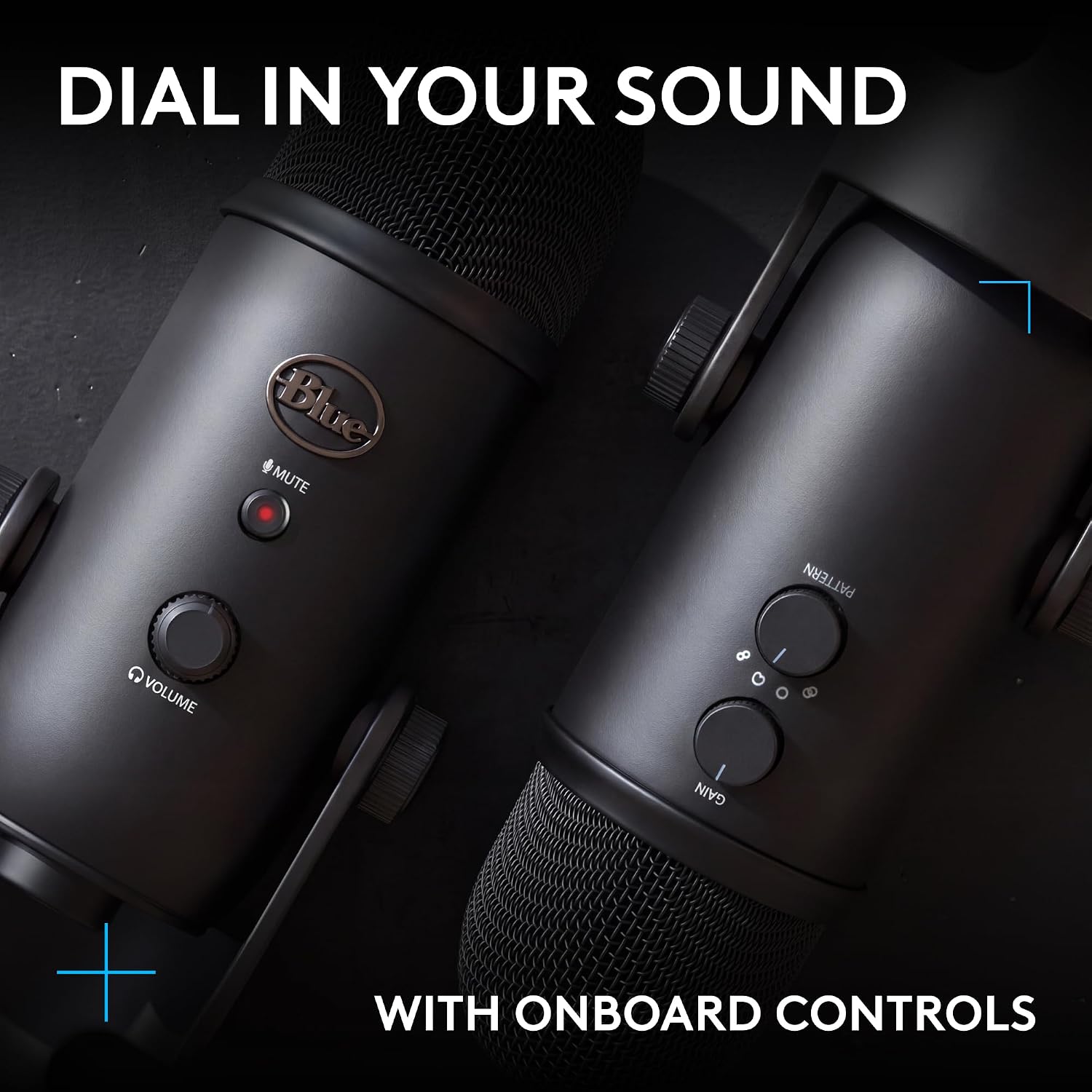
A physical pattern-select switch on the body lets you change between cardioid, bidirectional, omnidirectional and stereo in seconds.
You can reconfigure the mic between takes without opening a menu or installing anything.
For Podcasting
For a solo podcast, cardioid mode delivers a full, present voice with good rejection of room sound behind the mic.
The onboard mute button and headphone jack make it comfortable to run a show, monitor guests and cut out coughs on the fly.
Want flexible, great-sounding audio without a complicated setup? The Blue Yeti Blackout combines four pickup patterns, real-time monitoring and a durable, plug-and-play design in one clean, all-black microphone.
Frequently Asked Questions
Is the Blackout different from the Silver Yeti?
Only in finish. The hardware and specifications are identical; Blackout is simply the all-black version.
Is it good for music?
Yes. Its condenser capsules and stereo mode suit vocals, acoustic instruments and ensembles well.
What colors does the Yeti come in?
The classic Yeti is offered in finishes including Blackout, Silver and other seasonal colors; this listing is Blackout.
Does it have a mute button?
Yes, an instant mute button on the body cuts the mic immediately.
What warranty is included?
A two-year manufacturer warranty typically covers the Yeti against defects under normal use.
Final Thoughts on blue yeti interview setup
The Blue Yeti Blackout brings together a tri-capsule design, four selectable pickup patterns, 16-bit/48 kHz recording and latency-free monitoring in a solid, all-black USB microphone. It is a dependable choice for podcasts, streaming, voice-overs and music.
See Current Price & Availability on Amazon →
Disclosure: As an Amazon Associate, I earn from qualifying purchases. This article contains affiliate links, which means I may receive a commission if you make a purchase at no additional cost to you.
Views: 0