Disclosure: As an Amazon Associate, I earn from qualifying purchases. This article contains affiliate links, which means I may receive a commission if you make a purchase at no additional cost to you.
If you have been researching blue yeti frequency response you are in the right place. 20 Hz to 20 kHz. In this guide we walk through what actually matters, so you can decide whether the Blue Yeti Blackout is the right USB microphone for you.
Choosing a USB microphone means looking beyond the brand name to the details that shape real value: pickup patterns, sound quality, monitoring, build and ease of setup. Below, we break down the details of the Blue Yeti Blackout so you can judge whether it matches your needs.

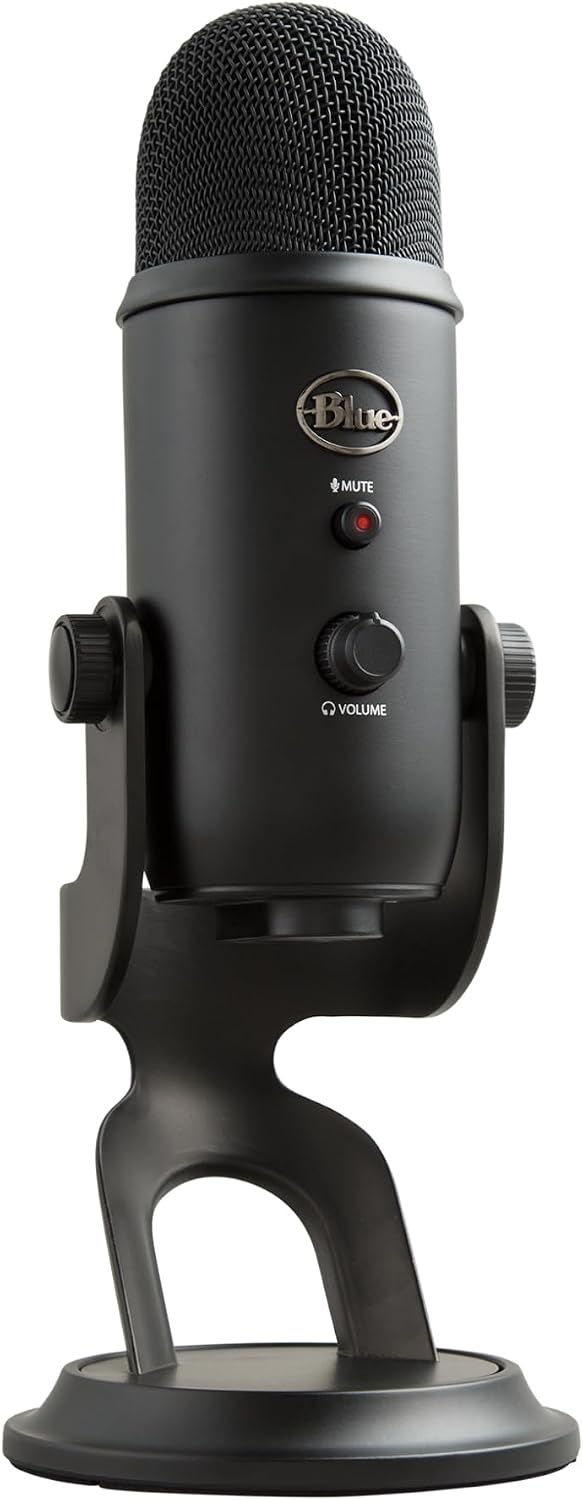
Blue Yeti Blackout — Tri-Capsule USB Microphone
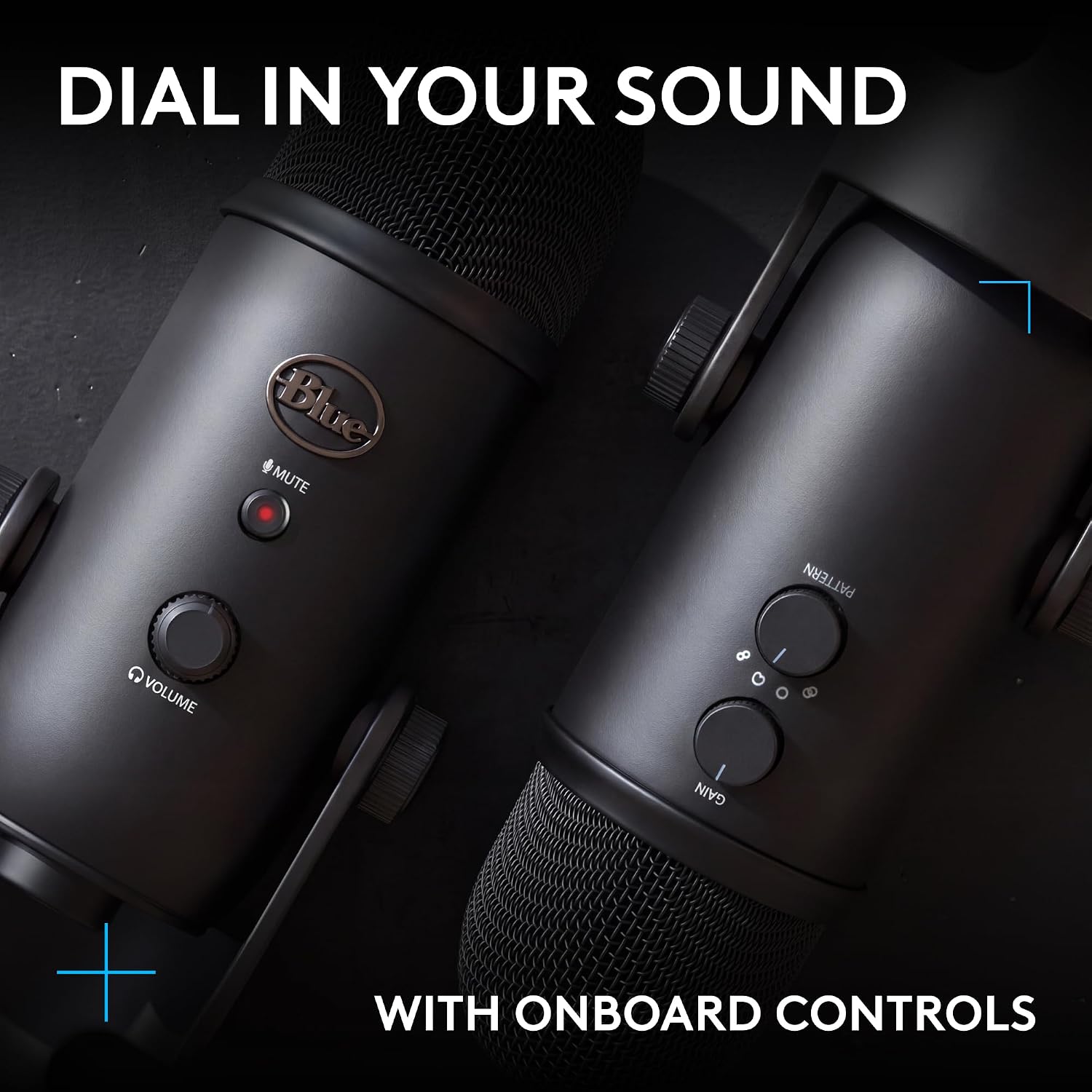
Four pickup patterns, 16-bit/48 kHz recording, zero-latency 3.5 mm monitoring and a sturdy metal build — plug-and-play on Mac and PC.
16-bit / 48 kHz Recording
The Yeti records at 16-bit depth and a 48 kHz sample rate — a solid standard for voice, streaming and music.
That combination captures a wide dynamic range and clean detail for everything from spoken word to instruments.
Frequency Response
With a frequency response of 20 Hz to 20 kHz, the Yeti covers essentially the full range of human hearing.
It captures the low warmth of a voice and the bright detail of cymbals or acoustic guitar with equal confidence.
Max SPL and Headroom
The Yeti handles sound pressure levels up to about 120 dB with low distortion, giving plenty of headroom for loud sources.
That means strong vocals, brave guitar strums and drums will not easily overload the capsules.
Mac and PC Compatibility
The Yeti works with both Windows and macOS, appearing as a standard audio input with no special driver for everyday use.
This cross-platform flexibility makes it easy to move the mic between a desktop, a laptop and a streaming PC.
How the Yeti Compares
Against simpler USB mics, the Yeti stands out for offering four pickup patterns and a latency-free headphone jack at a similar price.
It trades portability and a compact footprint for full-size flexibility and a sturdy, desk-mounted build.
Want flexible, great-sounding audio without a complicated setup? The Blue Yeti Blackout combines four pickup patterns, real-time monitoring and a durable, plug-and-play design in one clean, all-black microphone.
Frequently Asked Questions
Do I need to install a driver?
No. For basic recording the Yeti is plug-and-play on Mac and PC. Blue Voice software is an optional free download.
Can I monitor my voice without delay?
Yes. The 3.5 mm headphone jack provides latency-free, real-time monitoring with its own volume knob.
Which pattern is best for podcasting?
Cardioid for a single speaker; bidirectional for a two-person interview; omnidirectional for a group.
Does it come with a shock mount or boom arm?
No. It ships with the desktop stand and USB cable; a shock mount and boom arm are optional extras.
Is it USB-C?
No. It uses a standard USB-A connection via the supplied cable.
Final Thoughts on blue yeti frequency response
The Blue Yeti Blackout brings together a tri-capsule design, four selectable pickup patterns, 16-bit/48 kHz recording and latency-free monitoring in a solid, all-black USB microphone. It is a dependable choice for podcasts, streaming, voice-overs and music.
See Current Price & Availability on Amazon →
Disclosure: As an Amazon Associate, I earn from qualifying purchases. This article contains affiliate links, which means I may receive a commission if you make a purchase at no additional cost to you.
Views: 0