As an Amazon Associate I earn from qualifying purchases. Links below are affiliate links, which means I may earn a commission at no extra cost to you.
Warm white christmas lights and multicolour sets do two different jobs, and the mistake is choosing the one you like in a shop rather than the one that suits your window. A single warm-white window on a brick terrace can look calm and deliberate. The same window in multicolour can look like a fairground. Neither is wrong. What matters is the color of the wall behind it, the light already in the room, and how far away people will be standing.
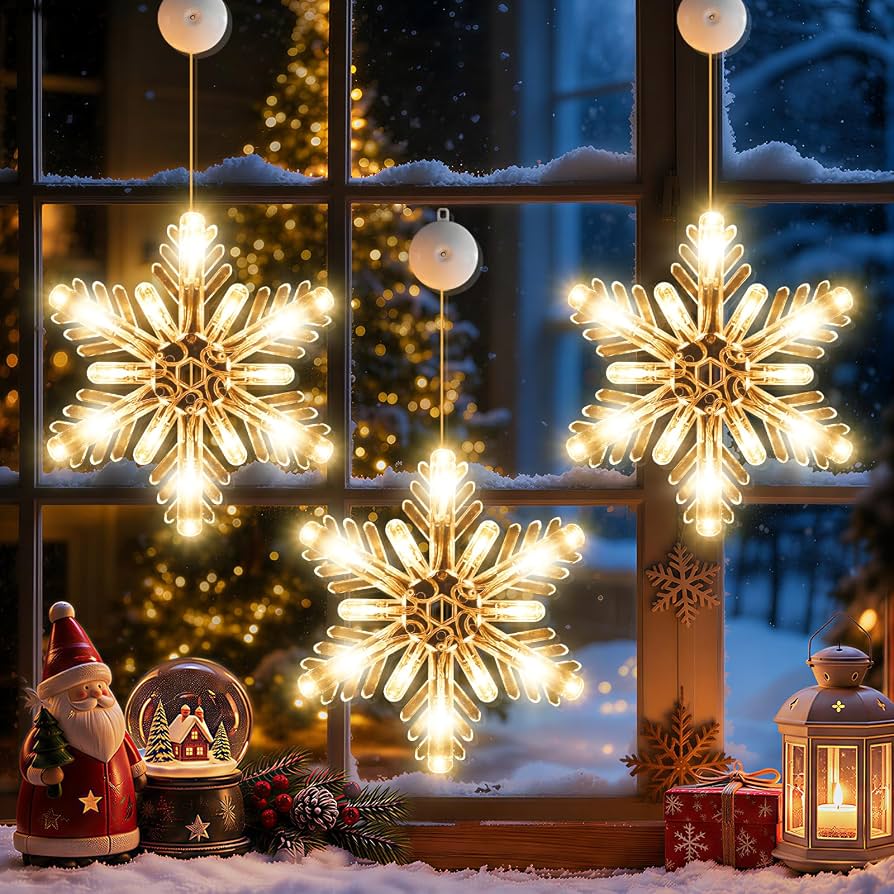
Quick answer
If your window has timber, brick or plaster around it and a lamp on in the room, warm white will look better and stay looking better for years. If the window belongs to a child’s room, a kitchen full of color, or a house that treats December as a party, multicolour earns its place. Check the current price on Amazon for the warm-white three-piece set this guide uses as its reference point.
Warm White Christmas Lights: What the Color Actually Is
Warm white as a category sits near 2700K on the color-temperature scale, around the light of an old incandescent bulb. It reads amber, not gold, and it flatters skin tones, wood and wool. Cool white, by contrast, pushes toward blue and makes brick look gray.
| Warm white | Multicolour | |
|---|---|---|
| Color range | One fixed tone | Red, green, blue, amber |
| From the street | Soft, residential | Bright, festive, busy |
| On brick or timber | Flattering | Clashing half the time |
| Photographs as | Warm, slightly dim | Mixed hues, hard to balance |
| Best room behind it | Living room, hallway | Playroom, kitchen, bar |
| Ages well into January | Yes | Starts to feel late |
The table is a fair summary, but the row that decides most purchases is the street one. You are not lighting a room. You are lighting a rectangle that people see from thirty feet away.
How each reads from the street
Distance does something specific to color. Warm white dims gracefully: at forty feet a warm window still looks occupied and calm, because the eye reads it as one soft source. Multicolour breaks into separate points of red and blue, and the further away you stand, the more it reads as noise rather than design.
That is why warm white dominates older streets and why multicolour works better on a modern estate where every window is a different color anyway. On a row of identical brick fronts, being the one multicolour window is a statement. Whether you want to make it is a separate question.
There is a practical angle too. A single warm tone is easy to photograph and easy to live with for six weeks. Why the snowflake silhouette suits this kind of light is worth a look if you are choosing a shape at the same time.
Matching the room you already have
Walk into the room at night with the ceiling light off. What is the floor? Warm oak and walnut want warm white. Gray laminate and white gloss can take either, but warm white stops a gray room feeling colder than it already does.
Then look at what is already glowing: a table lamp, a television, a fireplace. Warm white matches all three. Multicolour fights all three, which is why a multicolour window often looks better from outside than from the sofa.

The honest case for multicolour
Multicolour has two real advantages. It is unambiguously festive, which matters if the window is for children who want the loud version. And it hides imperfections: a mixed string reads as abundance, where a warm-white set draws attention to uneven spacing and gaps.
If you have a dark hallway window that nobody sits near, multicolour costs you nothing emotionally and adds cheer to a street. The rule is about the room behind the glass, not about taste.
Mixing rules that actually work
Do not mix tones inside one pane. Half warm, half multicolour looks like a mistake rather than a decision.
Do mix across a house, as long as each window is internally consistent. Warm white downstairs and multicolour in a child’s room upstairs reads as intentional. Two windows side by side in different tones reads as unfinished.
Pick one dominant tone per facade and let the other appear once. That is the whole system.
Who should pick which
Choose warm white if the window is in a living room, hallway or bedroom, if the house is brick or timber, or if you want the lights up into February without them feeling stale.
Choose multicolour if the window is a child’s, if the room is already bright and playful, or if your street is a mix of colors and one more will not stand out.
Skip both if you want color-changing lights you can switch between. This set is fixed warm white, and no setting will turn it multicolour. See the warm-white three-piece set on Amazon if that is the trade you want.
Two constraints sit outside this choice. If the window has no socket, seven cordless ways to decorate without an outlet covers the alternatives, and small sets for tight panes deals with narrow windows where three pieces is already too many.
What to check before you buy
- Fixed color. Warm white means warm white, all season, no switch.
- Indoor use only. Interior glass, not exterior windows or porch rails.
- Batteries not included. Three AAA per piece, nine for the three-piece set.
- Smooth clean glass. Suction cups need it, and textured panes will not hold.
- Modest brightness. Thirty-six LEDs across three pieces is atmosphere, not lighting.
FAQ
Is warm white too dim for a front window?
It is dimmer than cool white or multicolour, and that is part of why it looks calm. Thirty-six LEDs across three pieces will not light a room, but they read clearly from a sidewalk.
Can I put warm white in one window and multicolour in another?
Yes, and it usually works if the windows are not side by side. Keep each pane internally consistent and let one tone dominate the facade.
Will warm white look dated in a few years?
It is the safest long-term choice, because it copies the color of household lamps rather than a trend. Multicolour dates faster and comes back faster.
Bottom line
Warm white christmas lights are the lower-risk choice for most homes: they match the room behind the glass, they photograph predictably, and they still look right in mid-January. Multicolour is the better answer when the window belongs to a child or the street is already a riot of color. Decide by the wall, the lamp and the distance, not by the box. View the warm-white set on Amazon if the answer is the quiet one, and read the complete buying guide before you commit to a format.
Views: 0