As an Amazon Associate I earn from qualifying purchases. Links below are affiliate links, which means I may earn a commission at no extra cost to you.
Light color tips matter most when the goal is curb appeal rather than a party. A front exterior is seen from the street, often in photos, and judged in a few seconds, so the lighting needs to flatter the house instead of announcing itself. This 100ft RGB+IC run gives you 50 individually controlled LEDs and up to 16 million colors, which is a lot of choice to use sparingly. The trick is picking tones that sit well with siding, brick and trim and keeping brightness low enough that details are not washed out. This guide covers the colors that photograph well, the ones that disappear, and how to stay on good terms with neighbors.
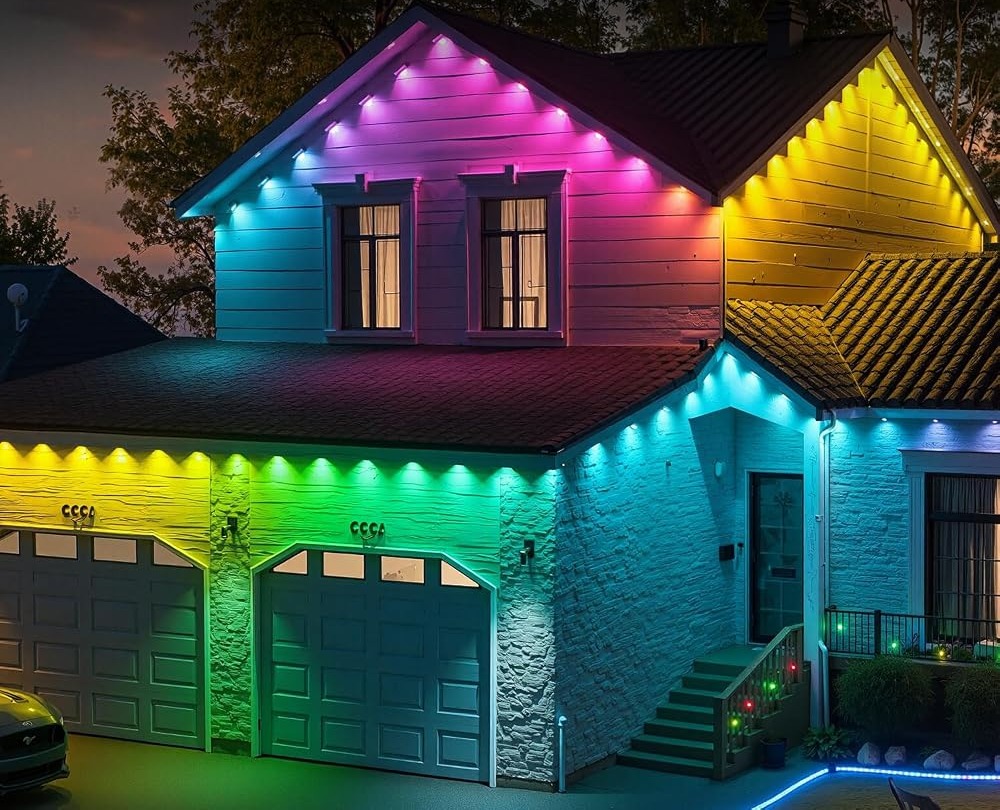
Quick answer
Light color tips for curb appeal come down to restraint: choose one or two tones close to the house’s own palette, keep brightness moderate, and avoid rapid motion. Per-pixel control lets a subtle shade drift along the eave instead of blasting one saturated color. The LotusLamp X app adjusts color, brightness and speed and includes a timer to end the display at a sensible hour. Check the current price on Amazon.
Light color tips that photograph well
In photos, moderate brightness beats maximum every time. Overdriven LEDs bloom around the edges and wash out siding texture, while a softer setting keeps the facade readable. Two related tones record cleanly; a full rainbow tends to look like glare.
The house’s own colors are the best guide. On warm brick, amber and soft white look natural. On light siding, a pale warm white adds definition without clashing. Trim is a useful anchor: a shade a step lighter than the trim outlines the roofline without competing with it.
Palette depth helps you get there. What 16 million colors really means explains how a deep palette lets you choose a slightly muted shade instead of a harsh primary, which is exactly what a photograph-friendly display needs.
One more factor is the angle of the camera. A roofline photographed from below catches more of the light’s output, so a setting that looks modest from the sidewalk can appear bright in a low-angle photo. If curb appeal photos matter to you, check a test shot from the street before settling on a final brightness.
Colors that wash out and tones to skip
Some choices consistently work against curb appeal:
- Pure saturated blue on beige siding can read as cold.
- Full-spectrum rainbow cycles flatten architectural detail.
- High brightness at close range erases texture and depth.
- Fast chasing draws the eye to the lights, not the house.
Fast movement deserves a specific mention. How chasing light effects work explains the per-pixel mechanism, but from a curb-appeal standpoint the relevant point is that motion competes with the building. For a front elevation, a slow blend or a steady tone is almost always the stronger choice. If a neighbor’s windows face your roofline, keeping movement slow and brightness low is also the considerate default.
Keeping the display neighbor-friendly
A display seen from the street is also seen by neighbors. The considerate approach is to lower brightness after dark, lean toward warmer tones late in the evening, and end the display with the built-in timer rather than letting it run all night. These are the same habits that make a lighting plan look intentional rather than intrusive. A quick word to an adjacent neighbor goes further than any timer, especially if your lights face their bedrooms.
If you want a fuller plan for the whole exterior, the permanent outdoor lights buying guide puts eave lighting in context alongside entry and landscape lighting. Start with the roofline and keep the rest quiet, so the color you choose reads as one idea rather than several fighting for attention.

Turning a look into a repeatable setting
Once you find a photograph-friendly palette, save it. The LotusLamp X app lets you set color, brightness, speed and sequence, then schedule the result with the timer. A saved look becomes a default you can trust, and you can build a small library for different seasons without changing the hardware. Build a DIY light show in five steps walks through that process from base color to schedule.
The included remote covers quick on/off when a phone is not handy, which helps when you want to drop to a calm setting without opening the app. Review the saved look after a week of use; it is easy to tune a shade slightly once you see it in different weather.
What to check before you buy
Curb-appeal lighting rewards buyers who value subtlety over spectacle.
- Confirm per-pixel control and an adjustable color palette.
- Check that brightness is easy to change in the app.
- Plan a sheltered spot for the rainproof control box and adapter.
- Make sure an outlet sits near the start of the run.
- Treat IP67 as the seller’s stated rating and keep the adapter dry.
- Read the up-to-50,000-hour life figure as a listing estimate.
FAQ
What is the safest color for a front exterior?
A soft warm white at moderate brightness works with almost any siding. It adds welcome and definition without competing with the house or the neighbors, and it suits most architectural styles.
Will a subtle display still be visible from the street?
Yes. Visibility comes from contrast and placement as much as brightness. A moderate tone along a clear roofline reads well from the sidewalk without washing out detail.
How do I stop the lights bothering neighbors?
Keep colors warm and brightness low late in the evening, avoid fast motion, and use the built-in timer to set an end time. A steady, dim display is rarely objected to, and it keeps the focus on the house rather than the lights.
Light color tips are ultimately about letting the house do the talking. If a restrained, year-round outline sounds right, see the RGB+IC eave lights on Amazon to review the current set.
Views: 0