As an Amazon Associate I earn from qualifying purchases. Links below are affiliate links, which means I may earn a commission at no extra cost to you.
Adhesive vs screw mounting is the decision that decides whether a permanent light run stays straight or slowly sags. A 100ft strip has to follow a long, exposed edge, and the fixing method has to match the surface it sits on. This set supports both self-adhesive backing and screw-in fixing, so the choice is genuinely yours. This comparison covers the two methods by surface and permanence, with the honest trade-offs of each. Get this decision right once and the display looks tidy for seasons; get it wrong and no amount of app control will help.

Quick answer
Adhesive vs screw mounting comes down to surface and how permanent you want the fix to be. Adhesive suits smooth, clean fascia and avoids holes, but needs careful prep and can loosen on rough or dusty material. Screws hold firmly on textured siding and exposed edges, but leave holes behind. For a year-round eave run, match the method to the surface. Check the current price on Amazon.
Adhesive vs Screw Mounting: Which Suits Your Surface
Adhesive backing is the cleaner option when the surface cooperates. It gives a smooth, almost invisible line with no drill holes, and it is the method most people picture first for a permanent strip. The catch is preparation: the fascia must be clean, dry and smooth. Dust, loose paint or a textured finish reduce how well the backing grips, and wind can work on a weak section until it lifts.
Screw-in fixing is the robust option. A screw holds regardless of a slightly rough surface and resists wind and heat better than adhesive alone. That makes it the sensible choice for exposed eaves, textured siding or any run that takes the weather directly. The trade-off is permanent holes and more work during installation, since each fixing point has to be placed and aligned along the 100ft run.
Many installs use both: adhesive for the long smooth stretches and screws at corners or exposed sections where extra hold is needed.
How the Two Methods Compare
| Factor | Adhesive backing | Screw-in fixing |
|---|---|---|
| Surface | Smooth, clean fascia | Rough or textured siding |
| Permanence | Easier to remove | Leaves holes |
| Wind exposure | Weaker on rough surfaces | Strong hold |
| Prep needed | Clean and dry first | Mark fixing points |
| Skill | Low | Moderate |
The table makes the choice fairly mechanical. If you want the least visible finish and have a sound, smooth edge, adhesive is enough. If the run faces wind or sits on rough material, screws buy peace of mind.
Weather and the Long Run
Weather is the reason mounting deserves this much attention. The seller rates the strip IP67 and calls the control box and adapter rainproof, with anti-UV material and a stated operating range of -4°F to 140°F (-20°C to 60°C). Those are seller-stated ratings, not a guarantee for any site. A rating on the strip does nothing if the strip itself pulls away from the fascia, so the fixing method is part of the weather story. A strip that lifts at one corner can pull on the next fixing and turn a neat line into a visible wave, so spend time on prep before the first section goes up. Corners and end points are where adhesive is least reliable and screws earn their place.
Plan the control box location at the same time. A sheltered spot near the outlet keeps the adapter out of direct water and shortens the visible cable run. The permanent lights vs spotlights comparison shows how a mounted outline fits into a wider exterior plan with fixed fixtures.
If you are weighing whether the strip should change color at all, the one color vs color changing outdoor lights guide compares a steady warm line with a flexible display. A simple warm-white run and a color-changing run mount the same way, so mounting is the constant either way.
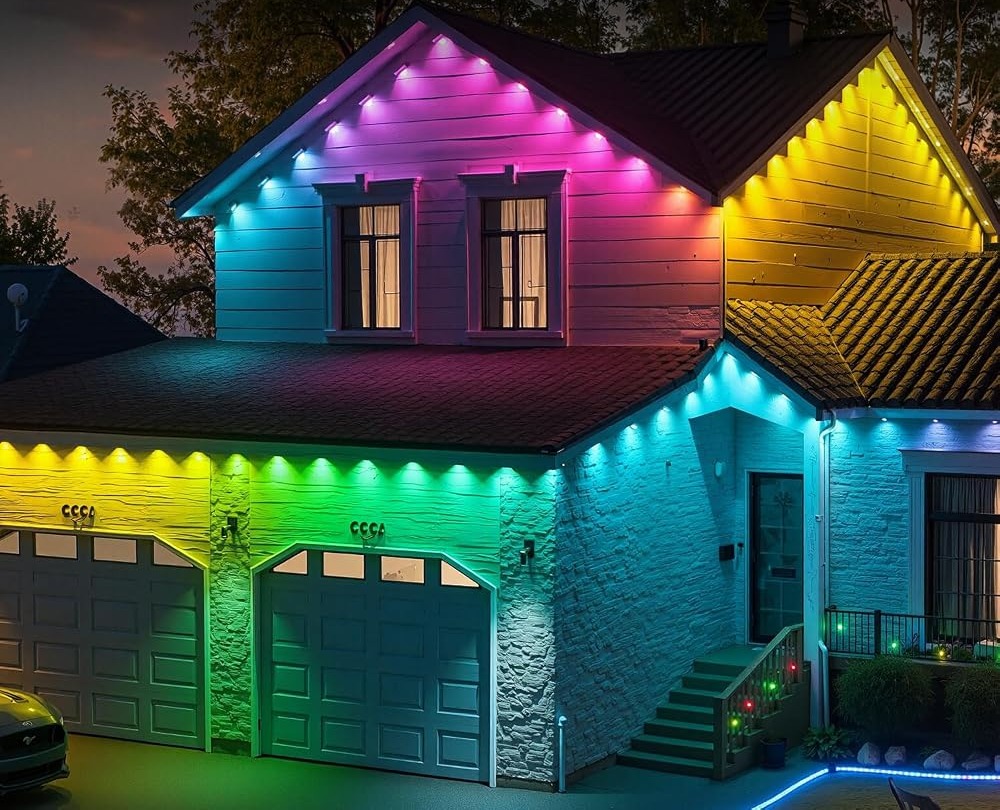
Permanence and Reversibility
Screws are the honest choice for a long-term install, but they are harder to reverse. Adhesive can sometimes be removed with care, though it may mark paint; screws always leave a hole to fill. Think about how long you expect to stay in the home before you drill. If you expect to move within a few years, that difference is worth weighing before the first hole goes in.
Control style does not change the fixing decision, but it does change how much you will rely on the strip staying put. If you want scenes and schedules you will use daily, the smart lights vs dumb lights outdoors guide explains what app control adds and why the included remote remains useful. The permanent vs seasonal Christmas lights hub steps back further and asks whether a fixed display fits your habits at all.
What to check before you buy
Choose adhesive for smooth, clean fascia and a less visible finish. Choose screws for rough siding, exposed edges or a windy spot. Skip the whole plan if the surface is in poor repair.
- Inspect the fascia for loose paint, dust or texture.
- Decide adhesive, screws, or a mix before starting.
- Confirm an outlet is near the run for the 24V adapter.
- Plan a sheltered spot for the control box and adapter.
- Treat IP67 as the seller’s rating and 50,000 hours as an estimate.
FAQ
Can I use adhesive on vinyl siding?
Only if the surface is clean, smooth and sound. Textured or chalky siding is a weak base for adhesive, so screws are usually the safer choice there.
Will screws damage the fascia?
Screws leave small holes, which most homeowners fill when the lights are removed. If avoiding holes matters more than maximum hold, adhesive is the cleaner option on a suitable surface.
Can I mix the two methods?
Yes. Adhesive works well along straight, smooth stretches, with screws added at corners and exposed points where the strip needs extra hold.
Adhesive vs screw mounting is really a match between method and surface. Once that is settled, see the 100ft set on Amazon with both fixing options supplied.
Views: 0