As an Amazon Associate I earn from qualifying purchases. Links below are affiliate links, which means I may earn a commission at no extra cost to you.
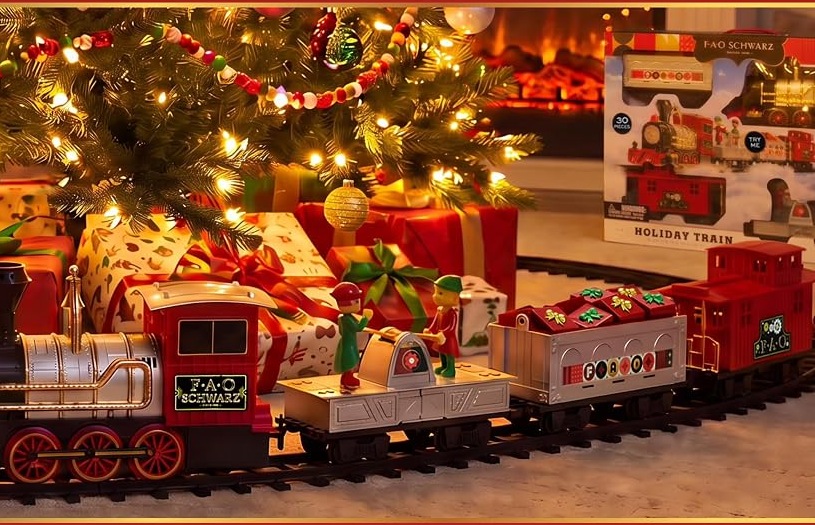
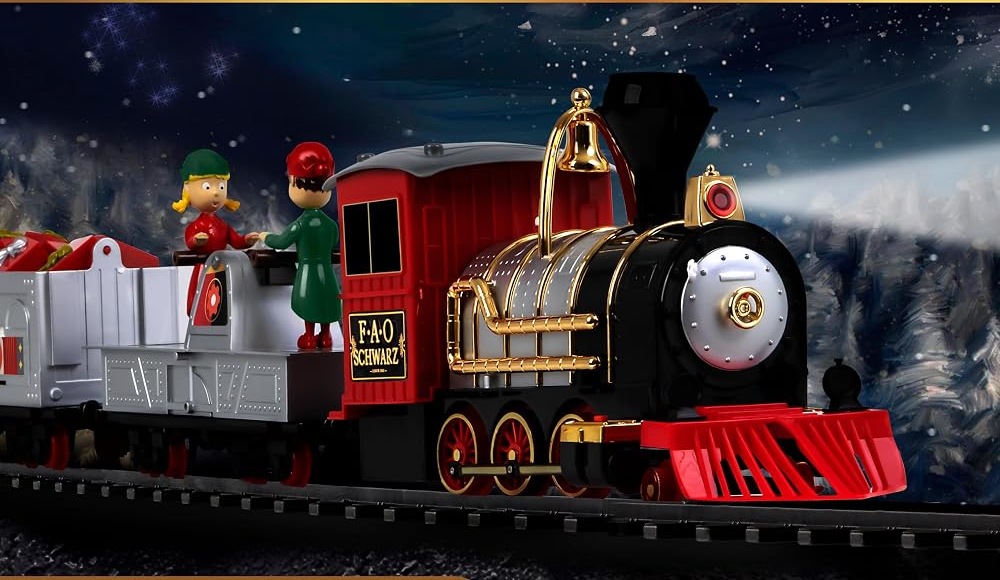
An animated train vs static train display comparison is mostly about what happens when nobody is looking. A still scene holds its composition until you change it. An animated one keeps performing: the locomotive makes another lap, the headlight rounds the bend and the figures on the cars move again. This 30-piece motorized holiday train set has one classic steam locomotive and four railcars with character figures that move as the train rolls. The 18 ft of snap-together track forms a circle or an extended oval, and the train is bi-directional with a working LED headlight and realistic sounds with a mute option. It requires 6 AA batteries whose inclusion is not stated, and the manufacturer age is 8 years and up. This guide compares the two display styles neutrally.
Quick answer
An animated train vs static train display choice depends on how much life you want at the base of the tree. An animated set moves on its own, with four cars whose figures animate as they roll. A static display stays as you arranged it and asks nothing of a power source. This set needs 6 AA batteries, which are not stated as included. Check the current price on Amazon.
Animated train vs static train display: the core difference
The distinction is continuous versus fixed motion. Here the locomotive is self-propelled, so the four cars follow it around the loop without a hand on them. As they roll, the character figures on the cars move, which gives the display a second layer of activity. The LED headlight stays on, and the realistic sounds can be switched off with the mute option when you want the motion alone.
A static train display has its own appeal. It can be arranged precisely, photographed without blur and placed on a shelf where no track has to stay level. It never asks for batteries and never stalls at a joint. What it cannot do is change on its own. For many families the two styles coexist: a still scene elsewhere in the room and an animated loop under the tree. Neither one cancels the other out, and the choice is about the role you want the train to play.
One small advantage of an animated display is that it rewards a glance. You do not have to stop and reposition anything to enjoy it; the next lap brings the headlight and the moving figures back past the same spot. A static scene, by contrast, asks you to look deliberately. Both are valid ways to enjoy a holiday display, and many homes have room for each.
What animation asks of your space
A moving display needs a clear, level path. The 18 ft of track snaps together into a circle or an extended oval, both meant to fit around tree skirts of all sizes. Gifts should sit outside the rails so the animated cars pass without catching, and the floor under the loop should be even. An adult should fit the six AA cells and press the joints flush, since the manufacturer age is 8 years and up and the scale is not specified.
Power and motion are related but separate. Because this set runs on batteries, the loop can go wherever the skirt allows, as the battery train vs corded train guide explains. The sounds add another choice, which the train set with sound vs silent train comparison covers: you can run with realistic effects or mute them and let the movement carry the scene.
Animated display or a wider scene
If your interest is a layout that stays up all year, the holiday train vs everyday model railway guide sets out how a seasonal set differs. This one is built to be assembled around the tree and packed away afterward, not to grow into a permanent board. If instead you want a bigger holiday scene, the compact train layout vs full village guide compares a simple loop with a wider arrangement of scenery.
The honest limits are worth stating. This is a plastic train that requires 6 AA batteries, and their inclusion is not stated. It needs a level surface and a clear lane to run well. The headlight is a small detail on the locomotive, not a room light, and the animation is limited to the figures on the four cars as the train rolls. No claim is made here about named characters or about the set lasting for decades. The manufacturer age is 8 years and up.
What to check before you buy
Before you choose a display style, note the limits. It is a 30-piece plastic set with one steam locomotive and four animated railcars. It requires 6 AA batteries and their inclusion is not stated. The manufacturer age is 8 years and up, and the scale is not specified, so plan from the 18 ft of track.
- Requires 6 AA batteries; inclusion is not stated.
- Manufacturer age 8 years and up.
- 30 pieces: one locomotive and four animated cars.
- Bi-directional travel on a circle or extended oval.
- Plastic build; scale not specified.
FAQ
Does a static display need any setup?
Less than an animated one. A still scene is arranged once and left in place. A moving train needs a level loop, a clear lane and six AA cells before the first lap.
Can I mute the train and keep the animation?
Yes. The mute option stops the realistic sounds without stopping the locomotive or the figures on the four cars, which keep moving as the train rolls.
Will the cars move if the train stops?
No. The figures animate only while the train is rolling, so a stalled locomotive means still figures. Check the cells and the track joints first.
An animated train vs static train display choice has no single answer. A still scene offers control and calm; an animated set like this one keeps the base of the tree alive with moving cars and a headlight. If you can keep a level 18 ft loop clear and have six AA cells ready, the animated style is a lively fit for the holidays. View the 30-piece holiday train on Amazon.
Views: 0