As an Amazon Associate I earn from qualifying purchases. Links below are affiliate links, which means I may earn a commission at no extra cost to you.
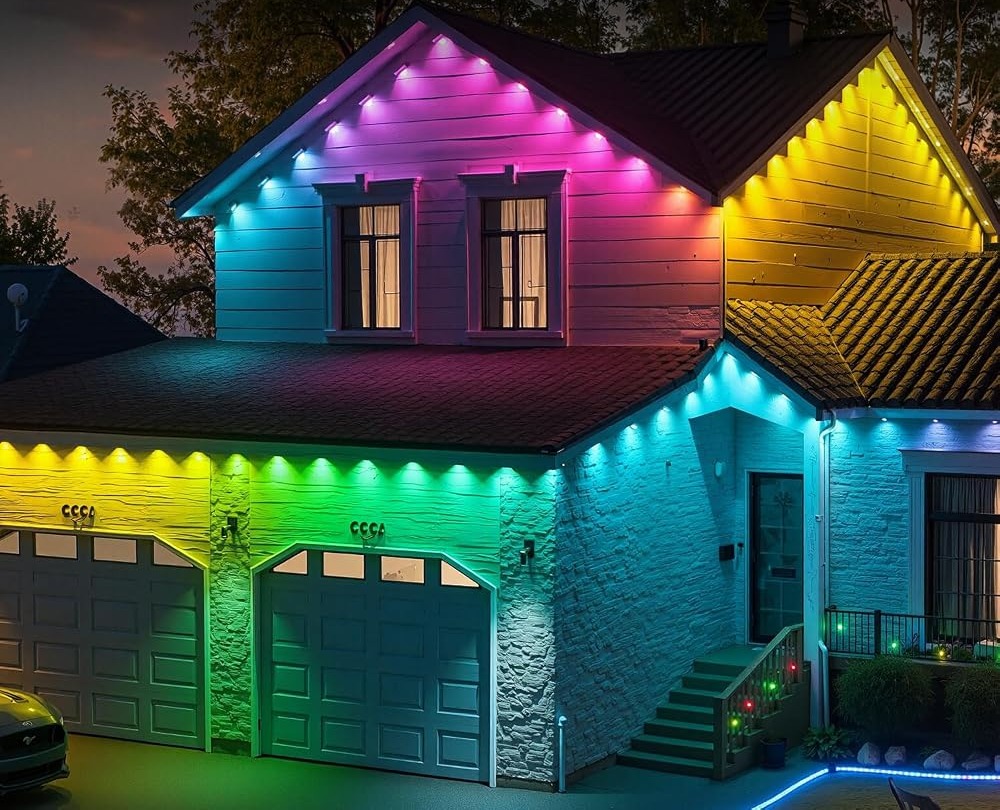
Outdoor light maintenance is the small job that keeps a permanent run looking deliberate instead of neglected. A 100ft set fixed to the eaves is out of sight most of the time, which is exactly why a lifted adhesive corner or a dusty lens goes unnoticed until a holiday. This guide sets out a seasonal routine you can repeat in a few minutes: inspect the mounting, clean gently, check the control box and adapter, then review the LotusLamp X schedule. Everything here stays within the seller’s stated facts for the 50-LED RGB+IC set. You do not need special tools for most of it, and you can do the ground-level checks without a ladder.
Quick answer
Outdoor light maintenance for a permanent set means four checks a few times a year: mounting, gentle cleaning, the control box and adapter, and the app schedule. The seller rates the run IP67 and calls the box and adapter rainproof, but sheltering them from standing water still helps. Check the current price on Amazon.
Outdoor Light Maintenance: The Seasonal Routine
Pick a calm, dry day and walk the whole 100ft run once. Look up at the mounting line and note any place where the self-adhesive backing has lifted from the fascia. Wind gets under a loose edge and works it loose over a season, so a two-minute press now prevents a drooping strip later. If you used screw-in fixing, check that the clips still hold and that no screw has been driven through a LED. While you are there, glance at the 50 RGB+IC LEDs themselves for a dark spot or a cloudy lens. The complete permanent outdoor lights FAQ answers the common questions about what the run can and cannot do, which helps you judge whether something you see is a fault or simply a feature of the design. A per-pixel strip can show several colors at once, so an uneven-looking line is not always a problem.
Clean Gently and Skip Harsh Products
Dust and pollen are the main enemies of a bright-looking strip. A soft, slightly damp cloth is enough for the lenses; wipe along the run rather than scrubbing at one spot.
- Use a soft cloth with plain water for the LED lenses.
- Do not use solvents or abrasive pads on the anti-UV housing.
- Wipe the control box exterior dry before opening anything.
- Clear leaves and debris from the mounting channel.
- Never direct a hose straight at the adapter or box.
- Let everything dry fully before reconnecting power.
The seller states an operating range of -4°F to 140°F (-20°C to 60°C), so seasonal temperature swings are expected. Cleaning is about keeping the lenses clear, not about forcing the housing to look new. Harsh products can dull the anti-UV material, which is the honest limit to how aggressively you should clean.
Check the Box, Adapter and One Section
Power is the other half of the routine. Confirm the adapter is still seated in its outlet and that the low-voltage lead has not worked loose from the control box. Rainproof is the seller’s wording, not an invitation to leave the box in standing water, and a unit that sits in a puddle deserves to be moved to a sheltered spot. If a short stretch of the run looks dim, compare it with its neighbors before assuming a fault; a single tight bend or a screw pressing on the strip can cause a local shadow. The guide to fixing flickering outdoor lights explains how to tell a connection problem from a mode setting, which saves a needless support message. If the run ever has to come off for renovation, how to store outdoor lights after take-down covers coiling without kinks and keeping the small parts together. A loose adapter and a tired connection are the two things this part of the routine is designed to catch.

Review the App Schedule Last
The LotusLamp X app controls color, brightness, speed, sequence, a music-sync option and a built-in timer. At each seasonal check, open it and confirm the schedule still matches how you use the space. Daylight changes mean a timer that worked in December may switch on too early in June. If the settings have become confusing, a clean reset outdoor light app setup and a simple rebuilt schedule is often faster than hunting through old scenes. Note the mode name you settle on, since the app offers 234 dynamic styles and 33 built-in scenes. Finish by taking one photo of the lit run in the app’s steady mode; it becomes a reference for future comparisons and takes seconds.
What to check before you buy
This set is for an owner who wants a year-round outline with minimal fuss. Skip it if you have no outdoor outlet, or if you are unwilling to glance at a roofline a few times a year.
- Confirm an outlet is close to the eaves for the adapter.
- Plan a sheltered position for the control box.
- Treat IP67 as the seller’s stated rating only.
- Treat 50,000 hours as a listing estimate.
- Keep order details for the stated 24-hour support reply.
FAQ
How often should I run this check?
Three or four times a year is plenty for most homes. A walk in early spring and another before the darker months catches the problems that matter without turning upkeep into a chore.
Can I hose down the strip?
No. The seller rates the run IP67 and calls the box and adapter rainproof, but that is not a promise it tolerates a direct jet. A damp cloth and a sheltered box are the safer approach.
Do I need to take the set down to clean it?
Usually not. Most of the routine is done from below. Only a persistent fault would justify removal, and the storage guide explains how to do that without kinking the run.
A few minutes of care keeps the 100ft RGB+IC line looking intentional. Check the current price on Amazon for the full listing and current details.
Views: 0