Disclosure: As an Amazon Associate, I earn from qualifying purchases. This article contains affiliate links, which means I may receive a commission if you make a purchase at no additional cost to you.
If you have been researching blue yeti monitor setup you are in the right place. Hear yourself clearly. In this guide we walk through what actually matters, so you can decide whether the Blue Yeti Blackout is the right USB microphone for you.
Choosing a USB microphone means looking beyond the brand name to the details that shape real value: pickup patterns, sound quality, monitoring, build and ease of setup. Below, we break down the details of the Blue Yeti Blackout so you can judge whether it matches your needs.

Blue Yeti Blackout — Tri-Capsule USB Microphone
Four pickup patterns, 16-bit/48 kHz recording, zero-latency 3.5 mm monitoring and a sturdy metal build — plug-and-play on Mac and PC.
Positioning Tips
Position the mic slightly off-axis rather than directly in front of your mouth to reduce breath pops and harsh ‘p’ sounds.
In cardioid mode, keep noisy keyboards and fans to the sides or behind the mic, where the pattern is least sensitive.
Gain Control
The gain knob sets input level so you can match the mic to a quiet voice or a loud instrument without distortion.
A good rule is to speak at your normal volume and set gain so the loudest peaks stay comfortably below clipping.
Room Acoustics Matter
Even a good microphone picks up the room, so soft furnishings, curtains and a quiet space make a real difference to your recordings.
Moving away from bare walls and reflective desks will tighten your sound more than any software setting.

Blue Voice Software
Blue Voice is a free download that adds optional processing such as compression, noise reduction and de-esser control.
It is entirely optional — the Yeti records perfectly well plug-and-play without installing any software.
Shock Mount and Boom Arm
A shock mount suspends the mic to isolate desk bumps and keyboard vibrations; a boom arm frees up desk space and improves placement.
Neither is included, but they are popular, inexpensive upgrades that noticeably clean up the recordings of fussy rooms.
Want flexible, great-sounding audio without a complicated setup? The Blue Yeti Blackout combines four pickup patterns, real-time monitoring and a durable, plug-and-play design in one clean, all-black microphone.
Frequently Asked Questions
Does it come with a shock mount or boom arm?
No. It ships with the desktop stand and USB cable; a shock mount and boom arm are optional extras.
Is it USB-C?
No. It uses a standard USB-A connection via the supplied cable.
Is the Blackout different from the Silver Yeti?
Only in finish. The hardware and specifications are identical; Blackout is simply the all-black version.
Is it good for music?
Yes. Its condenser capsules and stereo mode suit vocals, acoustic instruments and ensembles well.
What colors does the Yeti come in?
The classic Yeti is offered in finishes including Blackout, Silver and other seasonal colors; this listing is Blackout.
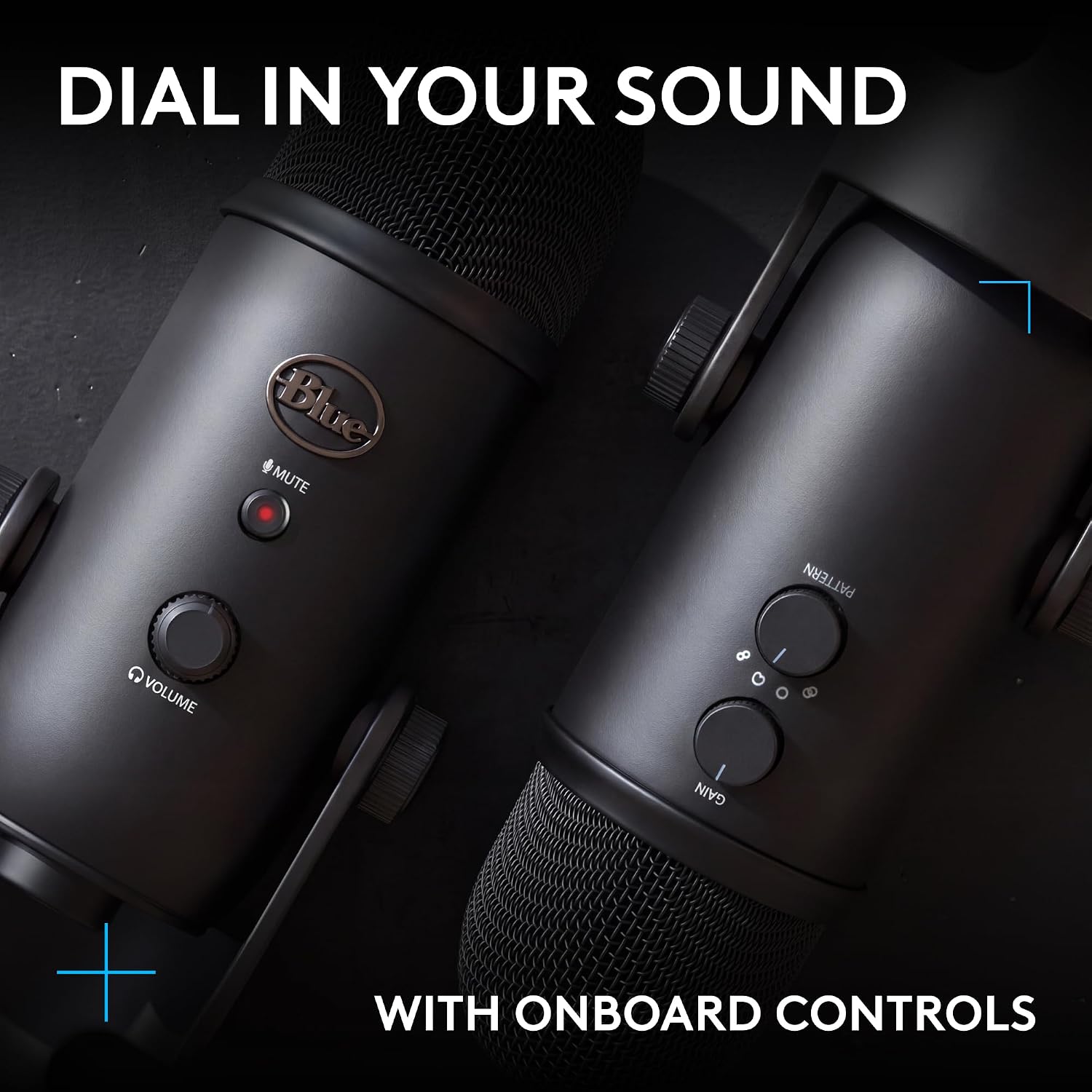
Final Thoughts on blue yeti monitor setup
The Blue Yeti Blackout brings together a tri-capsule design, four selectable pickup patterns, 16-bit/48 kHz recording and latency-free monitoring in a solid, all-black USB microphone. It is a dependable choice for podcasts, streaming, voice-overs and music.
See Current Price & Availability on Amazon →
Disclosure: As an Amazon Associate, I earn from qualifying purchases. This article contains affiliate links, which means I may receive a commission if you make a purchase at no additional cost to you.
Views: 0