As an Amazon Associate I earn from qualifying purchases. Links below are affiliate links, which means I may earn a commission at no extra cost to you.
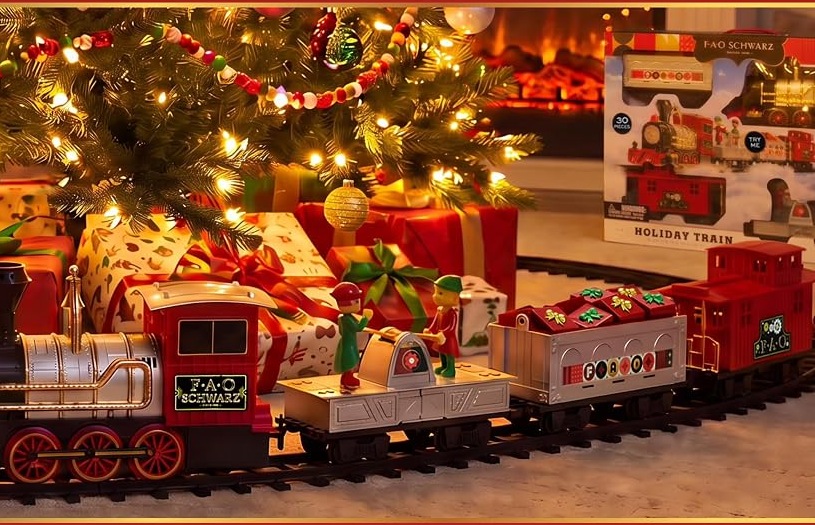
A train not moving under the tree is usually a small setup issue rather than a broken toy. This 30-piece motorized holiday train set has one steam locomotive, four animated railcars and 18 ft of snap-together track, and it needs 6 AA batteries whose inclusion is not stated. Before you assume the worst, work through a short list of simple checks: power, track connection, where the locomotive sits, and direction. This guide walks through each one in plain terms so you can get the loop turning again without guessing or taking anything apart.
Quick answer
If a train not moving problem appears on setup day, start with the 6 AA batteries, then press every snap-together joint fully closed, set the locomotive squarely on the rails and try both directions. A level floor and a clear path usually finish the job. Most stalls come from one of those four checks, not from anything inside the motor. Check the current price on Amazon.
Why is my train not moving?
Power is the first thing to rule out. The set is battery powered and requires 6 AA cells; their inclusion is not stated, so a fresh set may be all you need. Fit all six matching cells at once rather than mixing old and new, and make sure they sit the right way around. If the LED headlight looks dim or the sounds are weak, low cells are the likely cause. The train sound not working checks walk through the same power idea from the audio side, and the headlight not on guide does the same for the light. Because the locomotive, four cars and 18 ft of track all draw from one power source, a single weak cell can affect the whole loop. Swap the full set together and run a short test lap before you dress the tree around it.
Check the track and the floor
A secure loop is just as important as fresh power. The 18 ft of track snaps together by hand into a circle or an extended oval, and a joint that is not fully seated can stop the locomotive at the same spot every lap. Walk around the loop and press each connection until it feels flush. Then look at the surface beneath it: thick carpet or an uneven floor can tilt the rails and lift a wheel. A hard, level surface gives the most predictable run. Keep wrapped gifts and loose ornaments outside the rails so the animated cars can pass freely. A short checklist covers most stalls:
- Six matching AA cells, fitted all at once
- Every snap-together joint pressed fully together
- Locomotive and cars seated on the rails
- A level, firm surface with no deep pile
- Gifts and ornaments clear of the path
If a car keeps leaving the rails at one bend, the train keeps derailing fixes cover that specific symptom in more detail.
Seat the locomotive and try both directions
Sometimes the train is fine and the placement is not. Lift the steam locomotive and each of the four railcars and set them back down so all wheels rest on the rails rather than on a join or a carpet edge. Then use the bi-directional feature: the set is built to travel clockwise and counter-clockwise, so try the other direction. If it runs one way but stalls the other, that points back to a track or surface issue rather than the motor. Give it a short test lap before you add scenery. A train that turns smoothly when the loop is bare may hesitate once presents sit close to the rails, so leave a little clearance on that first run.
When the problem is sound or light instead
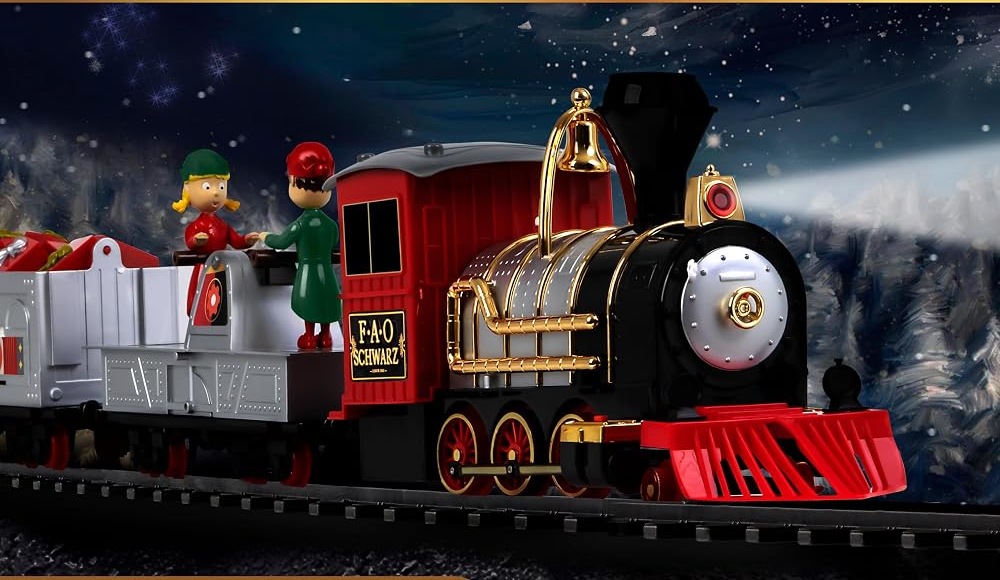
A train that runs but seems quiet or dark is a different case from one that will not move. The realistic train sounds include a mute option, so an apparent fault may simply be that the sound is muted; switch it back on before you change anything. The LED headlight is a working light on the locomotive, and a dim look usually follows weak batteries. Remember that this is a plastic toy with a manufacturer age of 8 years and up and an unspecified scale, so resist the urge to pry panels open. Keep every fix to a safe check you can do by hand, and use only the controls the set gives you.
What to check before you buy
Before you choose this set, be clear about what it needs. It is a 30-piece plastic train with one steam locomotive, four animated railcars and 18 ft of snap-together track. It requires 6 AA batteries and their inclusion is not stated, so keep a spare set on hand. The manufacturer age is 8 years and up, and the scale is not specified.
- Requires 6 AA batteries; inclusion is not stated.
- Manufacturer age 8 years and up.
- 30 pieces: one locomotive plus four animated cars.
- 18 ft of track as a circle or extended oval.
- LED headlight and sounds with a mute option.
- Plastic build; the scale is not specified.
FAQ
Could low batteries stop the train entirely?
Yes. Because the set runs on 6 AA cells, weak or mixed cells can slow or stop the locomotive. Fit six matching cells at once and retry both directions before looking anywhere else.
Does the mute option affect movement?
No. The mute option only silences the realistic train sounds. The locomotive, animated figures and LED headlight keep working, so a silent train is not necessarily a faulty one.
Is it safe to open the locomotive?
No. This is a plastic toy with no user-serviceable parts described for the buyer. Limit yourself to batteries, track joints, placement and the mute option.
A train not moving is usually fixed with patience rather than tools. Start with six matching AA cells, press the track joints flush, seat the locomotive and cars on a level surface, then try both directions. If movement is fine but the sound or light seems off, the linked checks above narrow it down. See the train set on Amazon.
Views: 0