As an Amazon Associate I earn from qualifying purchases. Links below are affiliate links, which means I may earn a commission at no extra cost to you.
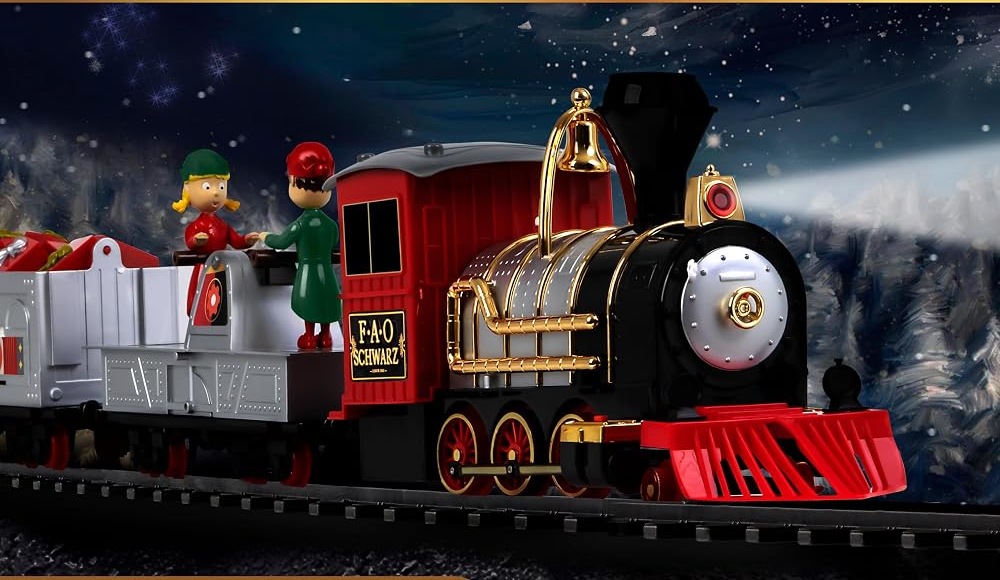
Motorized train slowing down is one of the most common mid-season complaints, and it rarely means the motor is failing. This 30-piece motorized holiday train set runs on 6 AA batteries whose inclusion is not stated, with one steam locomotive, four animated railcars and 18 ft of snap-together track that forms a circle or an extended oval. It travels bi-directionally and has a working LED headlight and realistic train sounds with a mute option. This guide keeps to gentle, safe checks: fit a fresh matching set of cells, confirm the loop is level and connected, and give the plastic pieces a soft wipe. No repair procedure or invented run-time is involved.

Quick answer
If a motorized train slowing down worries you, fit six fresh matching AA cells first, since weakening power is the usual cause. Then press the track joints flush and move the loop to a level surface. A soft dry cloth on the rails removes loose dust that can drag on the wheels. Check the current price on Amazon.
Motorized train slowing down: the usual causes
Power leads the list. The set requires 6 AA cells, and their inclusion is not stated, so a set that has run all season will naturally fade. Fit six of the same type at once rather than replacing one or two, because mismatched cells give uneven power. Seat them the right way around and watch the pace recover on the next lap. A dim LED headlight or quieter sounds alongside the slow movement confirm that the cells are the cause. Because the motor, light and audio share a single source, one weak cell can show up in several places at once. If the train still crawls after fresh cells, move on to the track rather than assuming a fault inside the locomotive; no user-serviceable parts are described for this plastic toy. It helps to test consistently: start from the same point, use the same direction and count how many laps the train completes before it slows. Repeating the test after each change tells you whether fresh cells or a joint made the difference. Test with all four cars attached, since their added weight is part of the normal display around the tree. A locomotive that runs quickly on its own may still slow once the animated cars are behind it, so judge the pace the way you actually use it.
Check the loop and the surface
A rough path steals speed just as surely as weak power. The 18 ft of track snaps together into a circle or an extended oval, and a joint that is not fully flush can make the locomotive hesitate at one point every lap. Walk around the loop and press each connection firmly. Then look under it: thick carpet, a rug seam or a floor board edge can tilt the rails and drag on the wheels. A hard, level surface gives the most even run. Keep presents and ornaments outside the lane so the four animated cars pass freely. If the pieces will not sit together cleanly, the train not moving guide lists the same connection checks in order, starting from a standing stop. An adult should make these adjustments because the manufacturer age is 8 years and up; a child can help by pointing to the spot where the train loses speed. Once the loop is level and the joints are flush, run one lap clockwise and one counter-clockwise and compare the pace. The bi-directional motor should perform about the same each way, and a big difference usually means a rough spot on one side of the track rather than a general loss of power.
A gentle clean and the other symptoms
Loose dust on the rails can add drag, so a soft, dry cloth is enough to wipe the track and the plastic cars. Do not use solvents or submerge any piece, and keep the battery area dry. Once the loop is clean and level, run a short lap in both directions and watch for a change. If the pace is fine but the cars look still, the figures not moving on the train guide explains that the moving characters depend on the train actually rolling. If the sound seems weak rather than the motor slow, the train sound not working checks start with the mute option and the same battery check. For the full set of decisions before you buy, the motorized train set buying guide covers the verified basics.
What to check before you buy
Before you choose the set, keep its limits clear. It is a 30-piece plastic train with one steam locomotive, four animated railcars and 18 ft of snap-together track. It requires 6 AA batteries and their inclusion is not stated, so have a spare set ready. The manufacturer age is 8 years and up, and the scale is not specified.
- Requires 6 AA batteries; inclusion is not stated.
- Manufacturer age 8 years and up.
- 30 pieces: one locomotive and four animated cars.
- 18 ft of track as a circle or extended oval.
- LED headlight and sounds with a mute option.
- Plastic build; the scale is not specified.
FAQ
How do I know the batteries are the cause?
If the headlight dims and the sounds weaken along with the slower pace, all three are drawing on the same six cells. Fit a fresh matching set and retest.
Can a dirty track really slow the train?
Loose dust can add drag on the wheels. Wipe the rails and cars with a soft, dry cloth, keep the battery area dry and never submerge a piece.
Is there a stated run-time per battery set?
No run-time is specified for this set. Judge battery strength by how the train runs, and keep a spare set of six matching AA cells on hand.
A motorized train slowing down is usually a power, track or cleanliness issue, not a failing motor. Fit six fresh matching AA cells, press the joints flush, level the loop and wipe the rails with a soft cloth. Then run a lap both ways and compare. View the 30-piece holiday train on Amazon.
Views: 0